

There’s a specific kind of woman I keep meeting in my work. She runs a department or a firm or a clinic. She has two or three direct reports who think she’s the calmest person in the building. She holds a calendar most people would buckle under. She has read every parenting book that matters and follows the right people online.
And every night around 6pm, she becomes someone she doesn’t recognize.
She snaps at the kid who whined about dinner. She threatens the iPad. She uses a tone she swore — swore — she wouldn’t use after the way she was raised. And then once everyone is in bed, she lies there for an hour replaying it, Googling “is this burnout or postpartum or something worse,” and wondering why she can hold a boardroom together but can’t hold this.
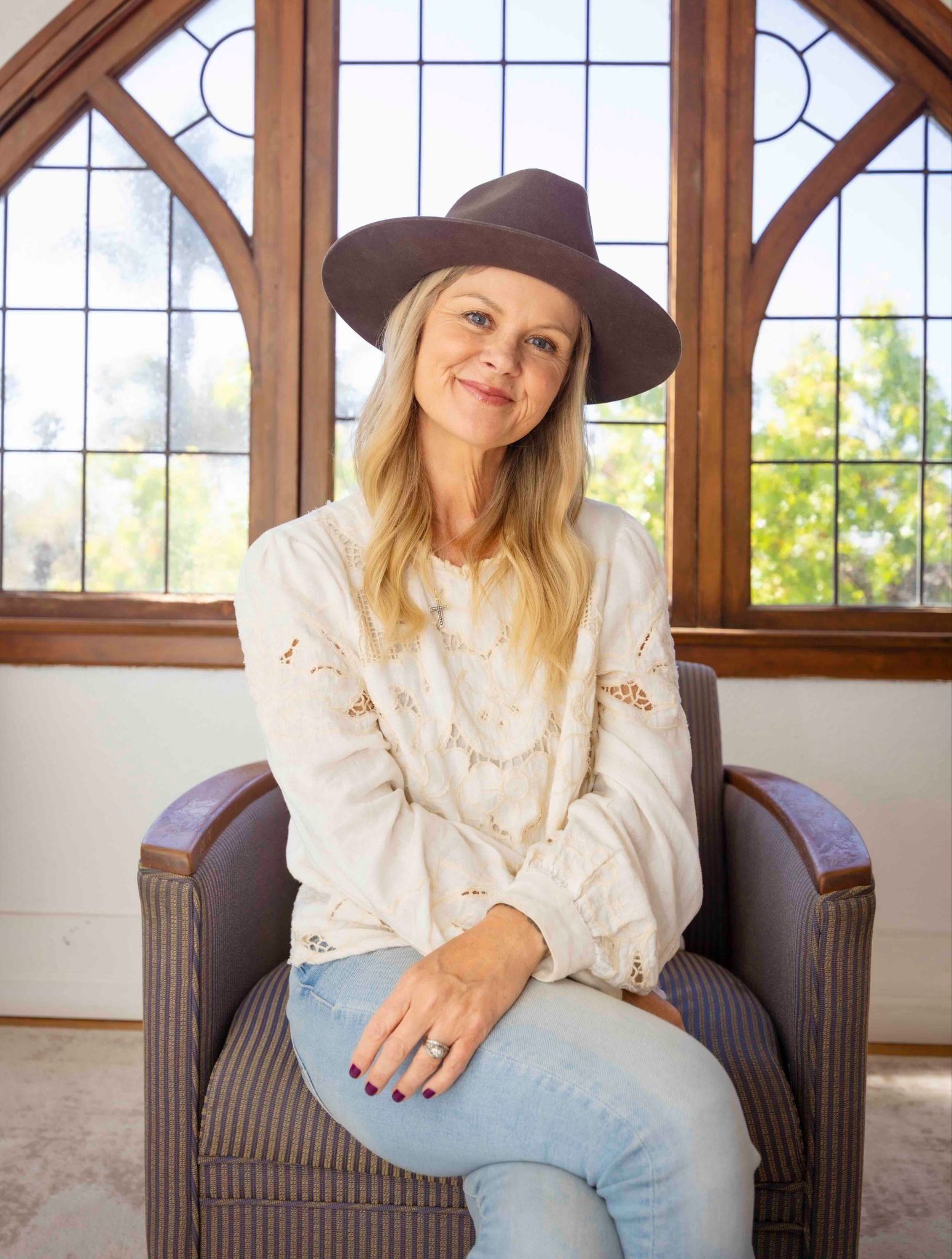
This is the woman I had Wendy Snyder on the podcast for.
The Problem Isn’t What You Think It Is
Wendy is a certified positive parenting educator, the founder of Fresh Start Family, and a parenting coach who’s been teaching connection-based work for over 15 years. Her new book — Fresh Start Your Family: Powerful Parenting to Restore Peace in Your Home — comes out at the end of May, and the central premise of her work is this: the reactive patterns you fall into with your kids aren’t a parenting problem. They’re a pattern problem. They’re a nervous system problem. And until you address the woman who is reacting, no amount of new scripts is going to stick.
This is exactly the work we do in The Capacity Method, just from a different doorway. So when Wendy and I get together, the overlap is intense.
The Reframe That Changes Everything
The single biggest shift Wendy teaches in her book is what she calls a paradigm shift around misbehavior. Most of us inherited a belief — usually unconsciously, just from being raised in the culture we were raised in — that a misbehaving child equals a bad child, which equals a bad parent.
Once that belief is operating in your nervous system, every time your kid acts out at the grocery store or at a family dinner or at a friend’s house, your body goes into a low-grade panic. They’re being bad, which means I’m being bad, which means people are watching. The reaction is automatic. It’s not a thinking thing. It’s a survival thing.
Wendy’s reframe: a misbehaving child equals a communicating child equals an empowered parent who can redirect with effective tools.
That sounds simple. It is not simple. But when it clicks — really clicks, in your body, not your head — it changes what 6pm feels like.
Why High Achievers Get Stuck Here
The women in my community are not under-resourced. They’ve read the books. They have insight. They have language.
What they don’t have is integration. The same nervous system that helped you build the career you built — the one that overrode hunger to get the paper done, that overrode exhaustion to make partner, that overrode every body signal in service of high performance — does not magically stop overriding when you walk through the door of your home. It keeps running the same pattern: ignore the signal, push through, deliver the outcome.
The problem is your kids are not an outcome. They’re not a deliverable. And the same nervous system strategy that got you the promotion will absolutely break your relationship with them.
This is what Wendy and I mean when we talk about needing both layers. You need the somatic regulation work — the part where your body learns it’s safe to slow down. And you need the actual parenting framework — the part where you have something to do once you’re regulated.
The Old Way vs. The New Way (A Real Role Play)
In the episode, I asked Wendy to role-play a sibling conflict scenario between my two girls.
She started with the old way. Full intensity. “Stop it. Stop talking. I am so sick and tired of this. You’re entitled.” I had a full somatic response on the recording. My body pulled back. My eyes welled up. I went straight to I’m in trouble.
Then she did it the second way. Same scenario. The kids came to her bickering over a remote and a TV show. She named what they were feeling. She validated that this was a hard thing for them. She reminded them of the tool she had taught them — the “win-win” process. She told them she was going to keep washing her face because she was taking care of herself. She trusted them to try first and come back if they got stuck.
The thing I noticed in my body the second time was wild. Even though Wendy barely looked at me, I felt more seen than I had in the first version when she was staring right at me. I felt empowered. I had access to my prefrontal cortex. I could remember tools.
This is the work. Same situation. Two completely different nervous system outcomes — for her and for me.
“Hard” Is Not What You Think It Is
One of the lines from this episode that I keep thinking about is Wendy’s reframe of what’s actually hard.
We’ve been trained to believe that emotional vulnerability is hard. Humility is hard. Slowing down to repair after rupture is hard.
What’s actually hard, Wendy says, is running your whole life on the most stressed nervous system you’ve ever had. What’s hard is feeling like your kid resents you. What’s hard is feeling like you resent your kid. What’s hard is being the woman who can hold everything but the people she loves most.
The cost of the old way is much higher than the cost of the new way. We just got conditioned to feel the old cost as “normal” and the new cost as “scary.”
The Grief Layer (No One Talks About This)
There’s a piece of this work that catches almost every woman off guard, and Wendy and I both named it in the episode.
When you start giving your kids something you never got to receive — softness when you make a mistake, repair after a rupture, the experience of being seen as a communicating human instead of a bad one — there is grief. There has to be. You are watching, in real time, what was possible. What was always possible. What you didn’t get.
Wendy calls sadness “an emotion that shows how much you care.” Letting yourself grieve what you didn’t get is part of how you make sure you can give it. The women in our community don’t skip this layer. We just don’t always know we’re walking through it.
What This Actually Produces (Over Time)
The most beautiful part of this episode for me was hearing Wendy talk about her oldest, Stella — the strong-willed three-year-old who was once “going to lose her mind.” Stella is now 18 and just got recruited as a Division I beach volleyball player at a top-ten program in the country.
But Wendy is the first person to say that’s not a story about athletic achievement. It’s a story about a kid who learned to advocate for herself. To organize her thoughts. To schedule a meeting with a coach when something felt unjust and bring receipts. To do conflict in a respectful way without avoiding it. To trust her own dream and persist.
That’s the actual product of this work. Not perfect kids. Capable ones. Resilient ones. Ones who got to grow up with a regulated parent and inherit a different pattern than the one she inherited.
What To Do Next
If you’re someone who has been doing the regulation work with me — taken the Capacity Pattern Quiz, listened to the podcast, maybe walked through The Pattern Lab or The Capacity Method — and you’ve been feeling like you have most of the puzzle but not the parenting piece, this is the piece.
Wendy’s book Fresh Start Your Family is the practical companion. Grab it. Read it slowly. Use the implementation guide. And if you order before May 26, she’s giving away pre-order bonuses at https://freshstartfamilyonline.com/pre-order.
You’re not broken. You’re not failing. Your nervous system has been holding too much for too long. We’re rewiring it. And now you have a framework for what to do at 6pm.
Watch the full episode here: YouTube Episode
Take the Capacity Pattern Quiz Here!
Join The Capacity Method Waitlist
>>> 💌 DOWNLOAD THE NERVOUS SYSTEM RESET GUIDE <<<
🥤 MY BURNOUT RECOVERY STORY + $10 OFF HAPPY JUICE




+ show Comments
- Hide Comments
add a comment